In an increasingly competitive and complex logistics and freight forwarding landscape, effectively managing every shipment, cost, document, and cash flow has become vital for business survival. However, many forwarding companies are still operating with fragmented software or generic ERPs that were not designed for the specific nuances of logistics.
The variations in multimodal transport processes, booking management, HBL/MBL handling, customs declarations, and per-job/shipment profit tracking demand a highly specialized management system. This is precisely why logistics and freight forwarding enterprises require an ERP software purpose-built for the industry.
What criteria should a suitable ERP solution meet, and what value does it deliver to a forwarding business? This article will clarify these critical factors through the real-world example of Sota FMS - a specialized AI-integrated ERP software for logistics and forwarding companies.
Read more: Predicting digital transformation trends in the Logistics industry in 2026?
1. Overview of ERP in logistics and freight forwarding
1.1 What is a specialized ERP for logistics and freight forwarding?
Erp (Enterprise Resource Planning) is an integrated software system that enables businesses to manage and synchronize core processes such as sales, operations, finance and accounting, HR, procurement, and reporting on a single unified platform. For the logistics and freight forwarding sector, an ERP must go beyond general administrative functions and expand to meet industry-specific requirements, including:
- Shipment, job, and booking management
- Multimodal transport tracking (sea, air, road, rail)
- Logistics documentation management (HBL, MBL, AWB, DO, etc.)
- Revenue and cost accounting per shipment
- Other specialized features
A specialized logistics ERP helps enterprises eliminate data silos from Excel or disparate systems while minimizing operational errors.
1.2 The role of ERP in modern logistics enterprises
In a highly competitive and volatile logistics environment, ERP plays a pivotal role in enhancing management capacity and business scalability, specifically:
- Centralized management and data transparency: All information from sales and operations to accounting is updated in real-time on a single system. Leadership can easily track shipment status, liabilities, costs, and profits without manual consolidation.
- Optimizing logistics operational efficiency: ERP supports the standardization of workflows from quoting and booking to transport execution, documentation issuance, and payment. Consequently, businesses reduce processing time, limit errors, and improve customer service quality.
- Cost and profit control per shipment: Unlike generic ERPs, a freight forwarding ERP allows for tracking revenue, costs, and margins at the job or shipment level, enabling accurate performance evaluation and timely decision-making.
- Building a foundation for growth and scalability: As shipment volumes increase and partner networks expand, ERP ensures stable and flexible operations. It also facilitates integration with other platforms such as CRM, BI, e-Document, and e-Customs.
2. What challenges does a logistics ERP solve for logistics and forwarding enterprises?

The primary differentiator lies in the depth of industry-specific functionality. While traditional ERPs are typically suited for manufacturing, trading, or simple service sectors, a specialized logistics and freight forwarding ERP is engineered around actual logistics workflows:
- Centering management on shipments/jobs rather than orders or products
- Supporting multimodal transportation: sea, air, road, and rail
- Managing comprehensive logistics documentation: HBL, MBL, AWB, manifest, and DO
- Allocating costs and revenue at the individual shipment level
- Supporting multi-currency transactions, exchange rates, and international partner/agent networks
A specialized logistics ERP delivers clear, practical value for freight forwarding businesses:
- Standardizing operational workflows from quotation and booking to transport execution and invoicing
- Reducing reliance on Excel and fragmented software, thereby minimizing data errors
- Controlling costs and profitability per shipment/job with high precision
- Synchronizing real-time data across sales, operations, and accounting departments
- Enhancing management oversight and decision-making capabilities for leadership
Specifically, a logistics ERP does more than just support current operations; it establishes a robust foundation for enterprises to scale, increase shipment volumes, and expand their international partner networks.
Read more: Challenges Logistics businesses encounter during digital transformation
3. Specialized features of Sota FMS in the logistics & freight forwarding industry
Before to understand detailed about the specialized features of Sota FMS, let's discover 8 essential features for an ERP system in the logistics industry:
- Intelligent transportation coordination
- Efficient inventory and stock control
- Smart fleet management
- Procurement management
- End-to-end order management
- Detailed forecasting of demand
- Seamless financial monitoring
- Customer and sales relationship management (CRM)
3.1 CRM module – sales and customer management
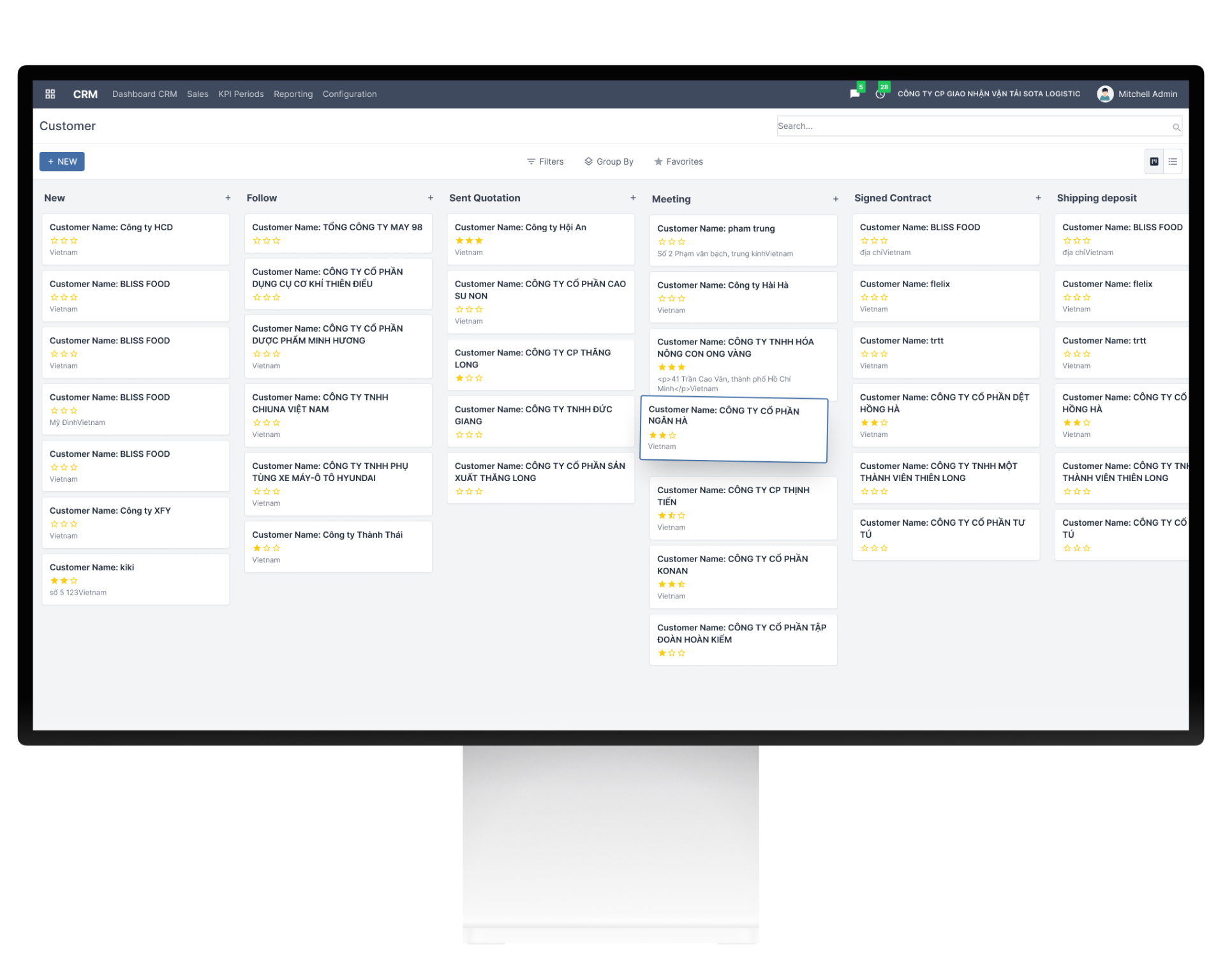
- Managing customers via a kanban interface, tracking the entire pipeline from initial contact to deal closure.
- Segmenting customers and sales teams by region, industry, and service groups.
- Generating rapid quotations using price lists updated from multiple providers.
- Establishing and monitoring kpis (calling, meeting, sign contract, quotation sent).
- Executing email marketing with campaign performance measurement capabilities.
Read more: Maximize the efficiency of transportation in Logistics operation with CRM
Read more: Why do Freight Forwaders businesses need a specialized CRM system
3.2 Freight operations management module Pricing management
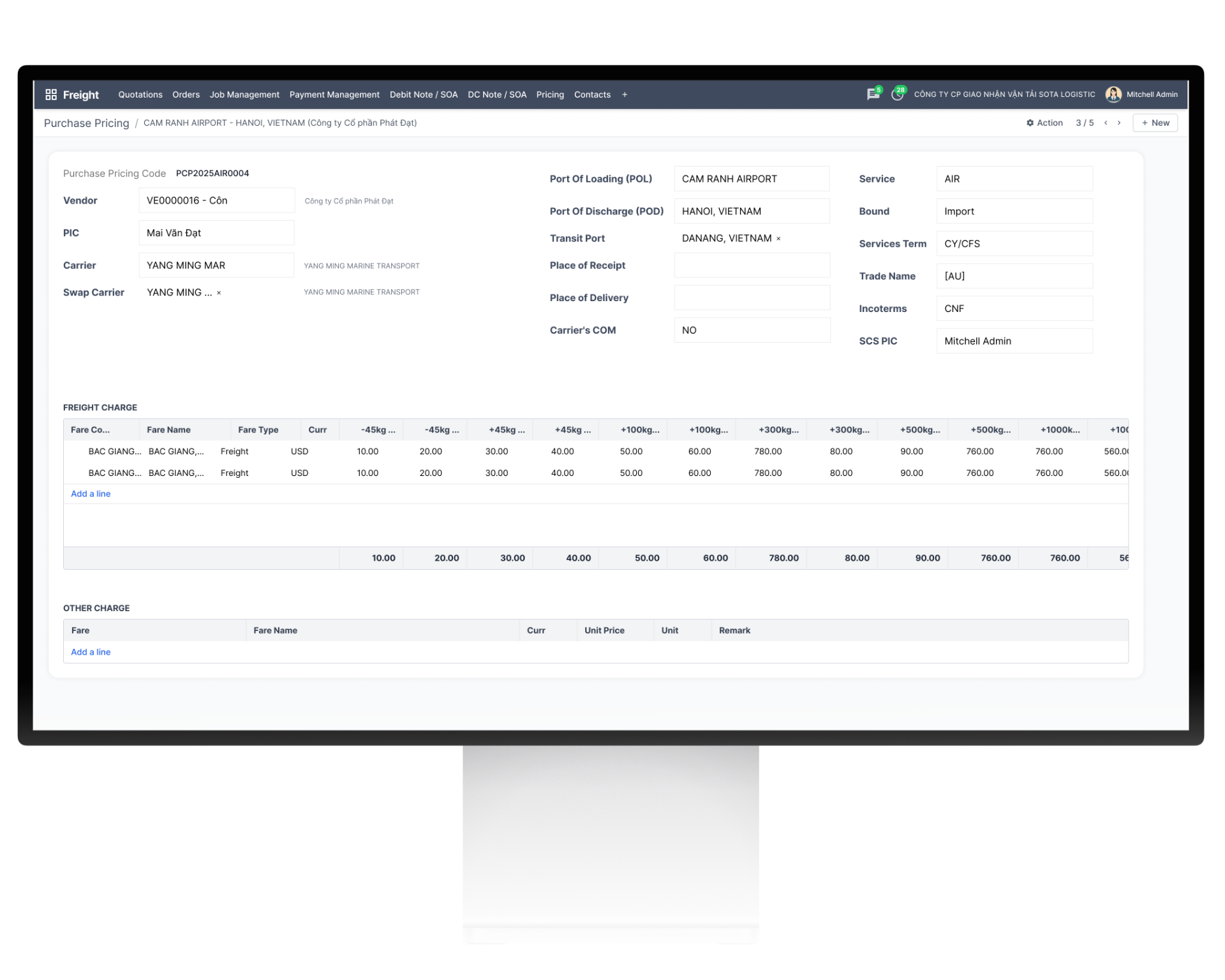
Pricing management
- Centralizing price list management from various providers (shipping lines, airlines, agents).
- Customizing, comparing, and updating rates easily based on specific trade lanes.
- Displaying comprehensive data including pol/pod, surcharges, and rate validity periods.
Job management
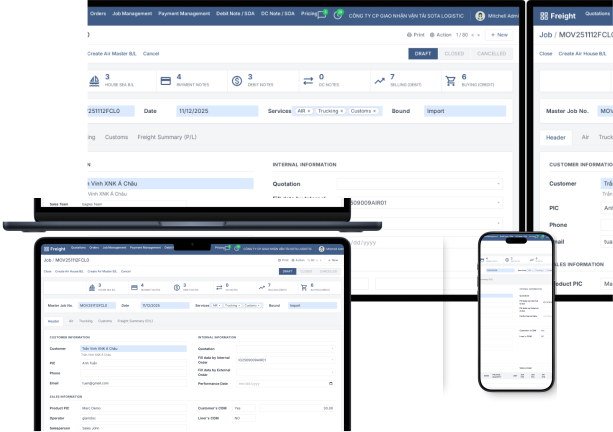
- Creating and managing jobs for each shipment, fully integrated with crm and other modules.
- Centralizing all documentation per job: invoice, packing list, b/l, c/o, manifest, an, do, etc.
- Supporting direct uploads, live previews, or generating document templates from the system.
- Tracking profitability per shipment with granular permission controls for easy oversight.
House B/L and master B/L management
- House B/L: automatically linked to jobs and documents, recording detailed cargo and partner info. Exporting templates for hbl, hbl original, and e-manifest.
- Master B/L: auto-populating data from house b/ls, integrating documentation and payments, and effectively controlling transit and schedules.
- Monitoring buy-sell rates and automatically generating debit/credit notes per bill of lading.
- Providing real-time shipment status tracking.
Revenue and cost management
- Debit note: automatically generating debits from jobs and hbl/mbl to ensure accurate revenue collection per shipment. Supporting multi-currency and flexible exchange rates.
- Payment & credit note: auto-generated from jobs and b/ls for tight cost management per shipment and supplier payables tracking.
- Dc note: dedicated for overseas partners to manage costs per shipment.
Detailed profitability reporting
- Performance and profit reports: providing in-depth analysis of efficiency and margins by shipment, route, and customer.
- Customizable reporting based on management needs, enabling leaders to make data-driven decisions in real time.
3.3 Artificial intelligence (AI) applications

Sota FMS integrates advanced ai technologies to enhance productivity and minimize errors:
OCR (optical character recognition) technology
- Automatically reading and extracting data from carrier bookings, reducing manual entry time by up to 70%.
- Ensuring data accuracy and instantaneous system updates.
- Optimizing human resources and reducing operational overhead.
AI Chatbot
- Providing 24/7 automated customer support directly on the corporate website.
- Ensuring rapid and accurate responses to frequently asked questions.
- Optimizing costs and staffing for customer service and sales.
- Enhancing professional standards in customer service.
AI Agent Assistant
- Serving as a powerful assistant for ceos and managers in synthesizing reports and information.
- Automating repetitive tasks: scheduling meetings, sending emails, and task reminders.
- Integrating with the entire erp/crm system for rapid data retrieval and analysis.
- Providing instant feedback to support effective decision-making based on actual data.
Read more: Discover new AI feature of Sota FMS - AI OCR - Reading booking file
Read more: The benefits of Agentic AI in optimizing the supply chain
Read more: Elevate customer experience with the AI chatbot integrated with Sota FMS
3.4 Finance – Accounting module
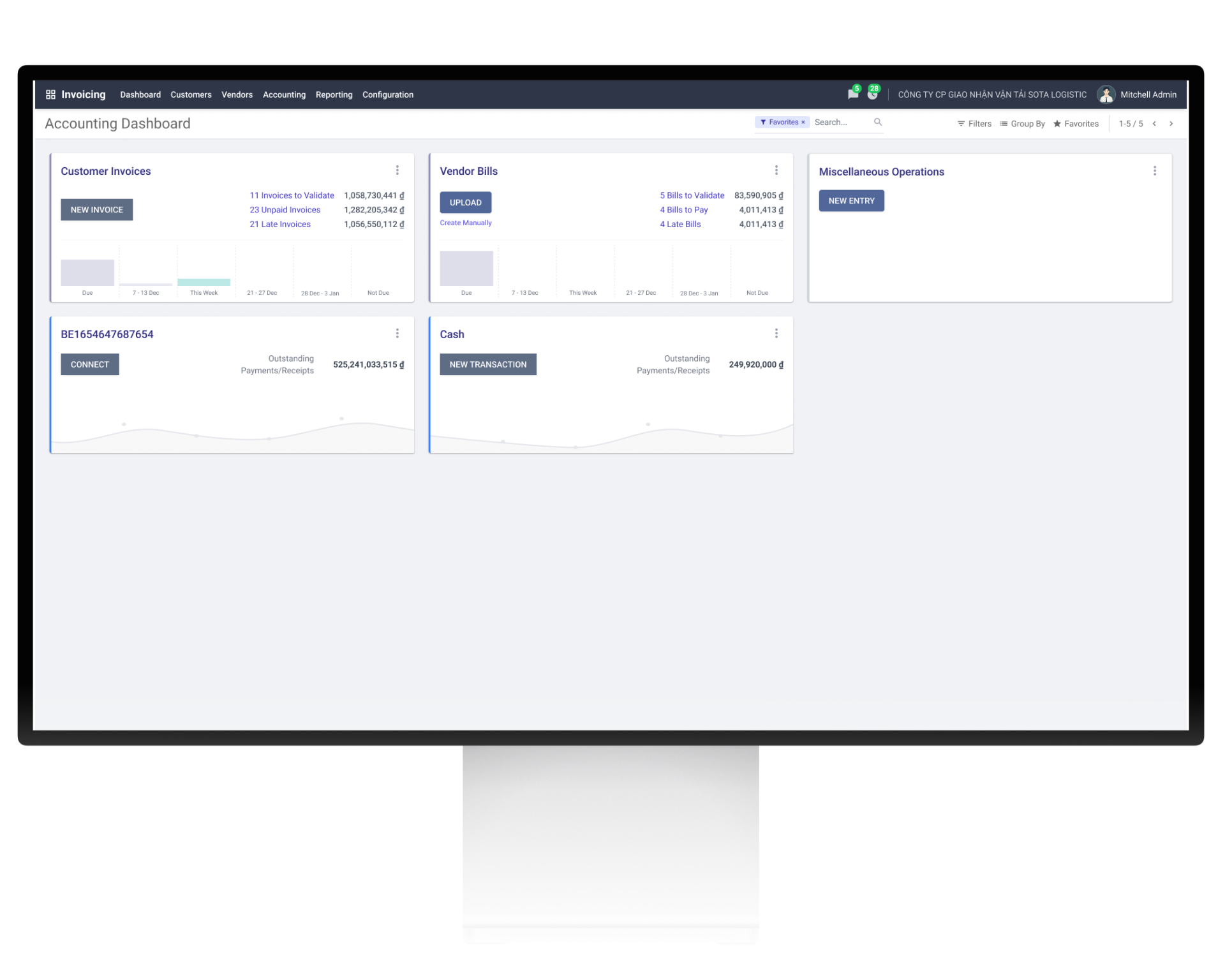
- Inter-module integration: establishing seamless connectivity between operations, sales, and finance, supporting automated or manual accounting as needed.
- E-invoicing: integrating with electronic invoice providers for automated issuance.
- Financial management: handling banking, vat, payroll, accounts payable/receivable, and advances.
- Standardized reporting: generating tax, internal, and financial reports in compliance with circulars from the ministry of finance.
3.5 Other supporting modules
Project management (oversized & overweight)
- Managing detailed project information for specialized shipments.
- Tracking real-time project status and conditions.
- Facilitating information sharing among relevant stakeholders.
Warehouse management
- Managing multi-warehouse operations including inbound and outbound activities.
- Tracking inventory by location and setting min-max stock levels.
- Applying pick rules: fifo (first in first out), fefo (first expired first out), and lifo (last in first out).
Human resource management
- Automating timekeeping and leave management.
- Managing labor contracts and employee profiles.
- Calculating payroll automatically based on attendance, leave, bonuses, and penalties.
3.6 Detailed and flexible reporting
- Custom reports: utilizing drag-and-drop functionality to create reports tailored to specific management needs and business models.
- Multi-dimensional views: accessing reports by customer, trade lane, employee, time period, and profitability.
- Real-time reporting: providing instantaneous data to help management make fast and accurate decisions.
4. Which enterprises need Sota FMS specialized for logistics & freight forwarding?
Specialized logistics ERPs are particularly suited for:
- Enterprises operating manually via Excel or multiple disparate tools: In this group, data is often fragmented—sales teams hold pricing files, operations manage documentation, and accounting re-enters data from scratch. This not only causes data discrepancies but also prevents the business from having a holistic view of operational efficiency. Sota FMS helps consolidate all data onto a single platform, reducing duplicate data entry, minimizing errors, and accelerating shipment processing speeds.
- Enterprises using legacy software, desktop apps, or non-real-time systems: Legacy systems are often difficult to scale, lack real-time updates, and rely heavily on manual intervention. As shipment volumes grow, these systems easily become overloaded, resulting in delayed reporting and a lack of flexibility. Next-generation logistics ERPs like Sota FMS enable access anytime, anywhere, providing real-time data updates and supporting multi-branch and multi-route management more effectively.
- Freight forwarders seeking to synchronize operational workflows: Freight forwarding involves complex processes: quotation, booking, operations, documentation, billing, and reconciliation. If each department operates differently, controlling risk becomes extremely difficult. Sota FMS standardizes end-to-end workflows, ensuring seamless information flow from sales to accounting, reducing dependency on specific individuals, and enhancing team scalability.
- Enterprises ranging from small to large scale: For small businesses, the challenge is controlling costs and avoiding errors during growth. For large enterprises, the challenge lies in complex governance, multiple branches, and high data volumes. A specialized FMS offers flexible scalability, being streamlined enough for small teams while remaining robust enough to prevent "system breakdown" during rapid expansion.
- Companies needing to standardize data and drive digital transformation: Unstandardized data leads to poor decision-making. When every report requires manual editing, leadership cannot make fast or accurate decisions. Sota FMS standardizes data from the outset, creating a foundation for profitability analysis, business forecasting, and future automation.
In summary, if a logistics and freight forwarding enterprise struggles to track profitability per shipment, suffers from cost leakages, deals with fragmented documentation, or lacks inter-departmental connectivity, investing in a specialized ERP like Sota FMS is more than just "organized management", it is a core strategy to increase efficiency, mitigate risk, and achieve long-term sustainable growth. If your enterprise is struggling to track shipment profitability, control documentation, or synchronize data across departments, a specialized ERP for logistics and freight forwarding is no longer just an option, it is a mandatory requirement for sustainable growth.
Read more: Comprehensive Freight Forwarder Management Software (FMS) - The optimal solution for logistics companies
5. Conclusion
In a landscape where the logistics and freight forwarding industry is entering a phase of fierce competition and where speed, data, and operational efficiency have become vital advantages choosing the right technology platform is no longer just a matter of "upgrading software," but an investment in the enterprise's future.
Sota FMS is not merely an erp, but a specialized management ecosystem for logistics, designed according to the actual workflows of freight forwarders and transport companies from quotation, booking, operations, and documentation to accounting and profit analysis per shipment; this helps enterprises standardize processes, synchronize data, control profitability at the shipment level, and drive comprehensive digital transformation.
Investing in sotafms or a specialized erp is an investment in operational efficiency, competitive edge, and the long-term growth of a logistics business where data becomes an asset and the system serves as the foundation for a breakthrough. Contact us for a consultation and to receive free documentation.