The year 2026 is expected to mark one of the most significant transformation phases in the logistics sector, driven by increasing pressure for faster delivery, greater data transparency, and cost optimization. Breakthrough advancements in technology, including AI, IoT, Cloud, blockchain, and process automation are fundamentally reshaping how logistics companies manage operations, handle documentation, and serve customers.
Amid global market volatility and increasingly stringent operational standards, digital transformation is no longer a strategic option but a mandatory requirement for businesses to remain competitive. This blog highlights the most critical digital transformation trends that logistics enterprises should focus on in 2026 — technologies that enhance operational efficiency, reduce costs, accelerate processing times, and support sustainable development.
1. Process Automation (Hyper-automation) in Logistics

Hyper-automation is becoming the core of digital transformation in logistics, where massive document volumes, complex workflows, and the need for rapid processing demand a higher level of automation than ever before. While companies previously focused mainly on digitizing data, by 2026 the logistics sector is shifting toward full-scale automation powered by a combination of RPA, Workflow Engines, ERP systems, and AI technologies.
RPA (Robotic Process Automation) eliminates repetitive manual tasks such as extracting data from booking forms, reconciling invoices, updating shipment statuses, and compiling operational reports. A Workflow Engine ensures that every business operation—from receiving a booking to dispatching, coordinating operations, and issuing documents—runs automatically according to predefined rules, reducing human dependency and minimizing operational errors. When integrated with ERP or FMS platforms, the entire logistics workflow becomes fully synchronized end-to-end, enabling businesses to shorten processing time, cut 60–70% of manual workload, and significantly enhance operational efficiency.
Hyper-automation is particularly critical for freight forwarders, international transport providers, warehousing operators, and e-commerce logistics companies—where speed, accuracy, and high-volume processing are mission-critical factors.
2. AI & Machine Learning – Optimizing operations and decision making

AI and Machine Learning are ushering the logistics industry into the era of smart operations. Instead of merely tracking and reacting, businesses can now forecast demand, optimize routing, and make data-driven decisions.
AI can analyze massive datasets—from orders, routes, weather conditions, warehouse capacity, to historical shipment performance—to forecast transportation demand or seasonal fluctuations in import/export volumes. This allows businesses to optimize inventory, allocate resources ahead of peak seasons, and avoid overloads or stock shortages.
In freight and delivery operations, AI generates optimal routes based on traffic conditions, desired delivery windows, and vehicle load capacity. Last-mile delivery companies, in particular, can reduce fuel costs and delivery time significantly through intelligent routing algorithms.
Additionally, AI-powered OCR automates the extraction of information from bookings, invoices, and B/L documents, reducing manual errors and accelerating document processing. AI chatbots and virtual assistants provide 24/7 customer support, answering inquiries, tracking shipments, and reducing the workload for Customer Success teams.
Altogether, AI empowers logistics businesses not only to operate faster, but also to make decisions grounded in actionable insights rather than intuition.
3. IoT & Real-time visibility: Delivering end-to-end transparency across the supply chain

In logistics, real-time visibility has shifted from a competitive advantage to an industry standard. IoT plays a critical role by providing live data from vehicles, containers, warehouse equipment, and transportation systems.
IoT sensors installed on trucks, reefer containers, or smart pallets enable businesses to monitor location, temperature, humidity, load capacity, or container door status. This data is continuously transmitted to the ERP system, allowing companies to know exactly where the cargo is, when it will arrive, and whether any risks have occurred along the journey.
In cold chain transportation or shipments involving sensitive goods, IoT instantly alerts operators when the temperature exceeds the allowable threshold, enabling timely interventions to prevent product damage. For long-haul transport, IoT helps track vehicle routes and detect anomalies such as prolonged stops or deviations from planned routes.
This level of transparency not only reduces risks, optimizes vehicle maintenance, and lowers operational costs, but also enhances customer experience by enabling real-time order tracking instead of relying on manual updates from dispatchers.
4. Next generation logistics ERP – The unified operational backbone

Next-generation Logistics ERP enables businesses to connect all processes—from Sales → Operations → Billing—within a single, integrated platform. Instead of each department using separate tools that fragment data and slow down operations, a modern ERP streamlines workflows and synchronizes information across the entire value chain.
Advanced ERP systems support quotation management, booking, dispatching, shipment tracking, document issuance, and cost reconciliation—all within one interface. This reduces manual errors, accelerates order processing, and improves cross-functional collaboration.
For freight forwarders, international transport providers, warehousing operators, or e-commerce logistics companies, next-generation ERP also provides real-time dashboards that track revenue, operating costs, on-time performance, and fleet efficiency. This empowers leaders to make decisions based on live data rather than delayed reports.
As companies scale and handle larger shipment volumes, a modern Logistics ERP becomes the foundational platform for building an intelligent, efficient, and cost-optimized operational ecosystem.
5. Blockchain in document management & reconciliation

In the logistics sector, where thousands of shipping documents circulate daily, blockchain offers exceptional transparency and security. This technology ensures data integrity, prevents unauthorized alterations, and minimizes document-related fraud.
Blockchain enables the issuance and storage of electronic bills of lading (e-B/L), import–export documents, transport contracts, and invoices as immutable records. Every update is time-stamped and permanently logged, making it easy for stakeholders across the supply chain to verify authenticity.
For cost reconciliation—a major pain point in logistics—blockchain facilitates smart contracts that automatically approve and trigger payments once predefined conditions are met. This significantly shortens reconciliation time, reduces disputes, and minimizes manual intervention.
As logistics enterprises increasingly work with multiple stakeholders—including carriers, agents, shippers, and customs authorities—blockchain becomes the key to building trust and enabling end-to-end transparency throughout the shipment lifecycle.
6. Document digitization – Logistics toward a paperless future

Logistics is one of the most document-intensive industries, with materials such as booking confirmations, B/Ls, invoices, delivery orders, packing lists, and manifests. Each shipment can generate dozens of documents. The 2026 trend emphasizes fully digitizing these document workflows to reduce processing time and minimize errors.
Technologies such as OCR, e-signatures, e-invoices, and digital document management platforms enable businesses to create, share, approve, and store documents entirely online. Employees no longer need to manually enter data or send files across multiple channels, reducing mistakes and preventing document loss.
Paperless operations not only accelerate workflows but also cut printing and storage costs while supporting ESG compliance—especially as global customers and partners increasingly demand greener, more transparent, and sustainable processes.
For logistics businesses, transitioning to paperless workflows can shorten document processing times from hours to minutes and elevate customer experience by enabling instant access to all shipment-related documents directly within the system.
7. Cloud Logistics – Scalable, flexible, and cost-efficient

Cloud Logistics is becoming the dominant model in the industry as companies require rapid scalability, multi-branch management, and lower infrastructure investment. With cloud-based systems, logistics enterprises no longer need physical servers or a large IT team; all data and applications are centrally stored, automatically updated, and protected with international-grade security.
Moreover, Cloud Logistics enables teams to access the system anytime, anywhere—via desktop, tablet, or mobile—making it ideal for departments that are constantly on the move, such as operations, delivery teams, and warehouse supervisors. Its flexible scalability allows businesses to efficiently increase capacity during peak seasons without operational disruption.
By optimizing operational costs, enhancing data security, and improving system connectivity, Cloud Logistics will remain a strategic choice for logistics enterprises—from SMEs to large corporations—throughout 2026 and beyond.
8. E-commerce logistics & smart warehousing
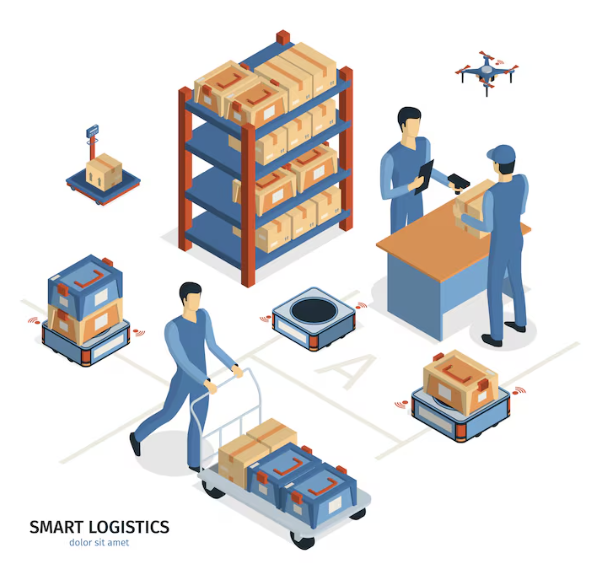
The rapid expansion of e-commerce has driven demand for faster, more accurate, and more transparent order fulfillment. This trend accelerates the growth of E-commerce Logistics and Smart Warehouse models.
Smart Warehouses leverage robotics, Warehouse Management Systems (WMS), IoT sensors, and barcode/RFID technologies to automate inbound–outbound–inventory processes. As a result, businesses can reduce 60–70% of order-processing time while minimizing manual errors.
In last-mile delivery, automated routing systems and data-driven analytics enable companies to optimize delivery paths, lower fuel consumption, and improve delivery lead time. The adoption of micro-fulfillment centers and urban warehouses further shortens delivery time to just a few hours.
E-commerce Logistics demands not only speed but also the capability to handle high order volumes at optimized costs — the key driver behind the increasing investment in smart warehousing and automated fulfillment infrastructure.
9. What should logistics businesses prepare to stay ahead of 2026 trends?

To fully leverage emerging technologies, logistics companies need a proactive and strategic digital transformation roadmap. First, enterprises must reassess their entire operational workflow to identify bottlenecks such as manual data entry, documentation errors, slow processing times, or poor system connectivity between departments.
Next is selecting the right technology platform — prioritizing solutions that integrate AI, IoT, Cloud, and open APIs to ensure seamless interoperability with other systems. Workforce training and effective change management are also critical to ensuring employees can adopt new processes and utilize technology efficiently.
Finally, businesses should partner with reputable technology providers that have proven experience in the logistics sector to ensure fast implementation, accurate alignment with operational needs, and long-term system stability.
10. Conclusion
The year 2026 will remain a pivotal milestone for the logistics industry, where technology becomes the core determinant of efficiency and competitive advantage. From process automation, AI, IoT, and Cloud Logistics to Smart Warehousing, digital transformation trends are unlocking major opportunities for cost optimization, productivity enhancement, and supply chain transparency.
Enterprises that invest early and prepare strategically will gain a significant edge — delivering faster, more accurate, and more sustainable services. Digital transformation is not merely a technological upgrade; it is the foundation enabling logistics businesses to scale and thrive throughout 2026 and beyond.