The year 2026 marks a surge in digital transformation, with an increasing number of enterprises viewing ERP as the "comprehensive platform" for operations, data governance, and performance optimization. However, empirical evidence suggests that over 55–75% of ERP projects fail to meet initial expectations. This is not due to low-quality systems, but rather the familiar pitfalls organizations encounter during the selection, implementation, and utilization phases.
These errors ranging from unclear objective definition and ineffective change management to misaligned expectations regarding ERP's "automation capabilities"—can cause the entire project to stall, inflate costs, or even fail outright.
In this article, we will outline the most common errors enterprises must avoid when leveraging ERP in 2026, and more importantly: the remedies to ensure ERP genuinely delivers the anticipated value and ROI (Return on Investment).
1. Vague objectives and undefined KPIs

One of the most significant causes of ERP implementation failure is the enterprise’s inability to clearly define the business objectives the system is intended to address. Many companies adopt ERP simply "to follow the trend" or expect the ERP to "automate everything," yet they fail to define: which departments are facing specific pain points, what the expected efficiency improvement is post-implementation, which Key Performance Indicators (KPIs) need to be measured, and so on.
Lack of defined objectives often leads to scope creep, wasted time, or significant budget overruns. Ultimately, the ERP system fails to generate real value and is deemed "ineffective."
The solution lies in the enterprise identifying the core strategic goals for deploying the new software, and determining the requirements across all departments to establish a comprehensive, unified process with measurable KPIs. When objectives are clear, ERP transitions from being a discrete piece of software to a strategic business tool.
2. Choosing an ERP unsuited for the industry
Not all ERP systems are created equal. An extremely common mistake is when an enterprise selects a generic ERP (a system designed for all sectors) instead of an industry-specific ERP.
What Problems Does a Non-Specialized ERP Cause?
- Lack of Industry-Specific Functionality: Missing features essential for the sector (e.g., Logistics requires management of booking, waybills/B/Ls, containers, and costing by shipment/job).
- Extensive Customization Required: Leads to increased cost, higher time consumption, and elevated maintenance risk.
- Non-Optimized Workflow/Process Friction: Complex operations make user adoption difficult.
- Inadequate Support for Specialized Reporting: Fails to provide industry-standard reports (Cost of Goods Sold, shipment reports, profit per job, etc.).
The consequence is that the enterprise expends budget yet fails to resolve core issues. In fact, the ERP system can become a burden because it does not align with actual business processes.
To address this, enterprises should opt for an industry-focused ERP system, verify if all necessary modules are available out-of-the-box, and request a demo using actual business scenarios to confirm capabilities. Finally, a thorough fit-gap analysis should be conducted before contract signing.
For Logistics enterprises, a specialized system, such as Sota FMS, offers the key advantage of a module structure built specifically for the industry, significantly reducing customization costs.
3. Inefficient data migration and unclean data
Data constitutes the most critical input for business operations. If the data is unclean (or "dirty data"), the ERP system will not be able to function correctly; no matter how good the software is, it will fail to meet the enterprise's usage needs and negatively impact business performance.
Some common errors enterprises encounter when uploading unclean data include:
- Duplicate or incorrectly formatted customer data.
- Goods/products lacking standardized item codes (SKUs).
- Missing or non-standardized historical order information.
- Accounting data inconsistencies between legacy systems.
- Lack of a data authorization/access control process prior to migration.
The consequences are inaccurate reports, flawed operational processes, time wasted on error correction, and a loss of confidence in the system. ERP operates based on connected data across multiple departments. If the source data is flawed, the entire operational chain is affected: from sales, accounting, warehouse, and operations to financial reporting.
Therefore, enterprises need to establish a data standard framework before migration (standardizing item codes, customer codes, employee codes, etc.) and perform data cleansing before actual deployment. Furthermore, it is necessary to conduct test migrations and assign personnel to oversee data quality control, along with a comprehensive checklist before the go-live phase. The success of an ERP project depends $\mathbf{80\%}$ on data, not technology.
4. Lack of leadership commitment

Executive commitment is the decisive factor for successful ERP deployment. However, in practice, many enterprises assign the implementation solely to the IT department or a few department heads, while leadership fails to participate in process definition, communication, or key decision-making regarding change management.
ERP is not just software; it is a comprehensive business transformation project. Without consensus and top-down direction:
- Employees are more likely to exhibit resistance to change.
- Departments operate inconsistently $\rightarrow$ leading to process conflicts.
- The project is subject to continuous delays due to a lack of timely decisions.
- The project risks being shelved or failing midway.
Enterprises with committed and decisive leadership see the success rate of ERP implementation increase multifold.
5. Over-Customization, unsuitable for real-world practices
A very common mistake is the expectation that the ERP system must perfectly replicate 100% of old habits, leading to requests for excessive customization. This results in several issues:
- Increased implementation costs.
- Prolonged go-live timeline from a few months to... several years.
- A complex system that is difficult to operate and train users on.
- Difficulty in version upgrades due to deep changes in the core code.
- Future maintenance and operational risks.
Instead of adapting their mindset and processes to fit best practices supported by the new system, many enterprises insist on following old processes with the new system, creating a paradigm conflict in the company's approach to change.
For instance, many companies demand that the ERP function exactly like the ten existing Excel files, requesting unnecessary features just to accommodate the old workflows. This creates significant difficulties for both the software implementation partner and the software developer/designer.
6. Ignoring integration capabilities

In the era of digital operations, businesses often select an ERP based only on its internal functionalities, failing to verify its interoperability with other systems such as HRM, AI, CRM, etc. This results in fragmented processes, inefficient operations, and the inability to build real-time dashboards for leadership.
Many enterprises only discover integration issues after the ERP has been deployed, at which point adding necessary APIs becomes significantly more costly and complex. A robust ERP system in 2026 must serve as the central platform, smoothly connecting all business activities.
The solution here is for businesses to thoroughly assess integration capability via APIs, SDKs, and the service ecosystem. Require the implementation partner to demo system integration with your existing platforms, and prioritize ERPs built on an open architecture.
7. Undermining security and compliance
In a landscape where data is the enterprise's most vital asset, security and regulatory compliance are not just technical requirements—they are survival factors. However, many businesses choosing an ERP fail to adequately assess the level of security or overlook mandatory industry-specific compliance standards.
The consequences of neglecting security are severe:
- Risk of data breaches involving customer, partner, and financial data.
- Loss of brand reputation and exposure to legal liability.
- Operational disruption if the system is compromised.
- Reports failing to meet mandated accounting, tax, or specific industry regulations.
Therefore, during ERP implementation, security must be the paramount factor. Select an ERP with multi-layered security, clear role-based access controls, and integrated mechanisms for encryption, automatic backup, and unauthorized access prevention. Furthermore, ensure the system adheres to standards for accounting, taxation, e-invoicing, and ESG (if required by the industry). Review the audit trail capabilities and data risk management processes. As a business scales, risks amplify; security must be a top priority for any ERP deployment in 2026.
8. Expecting ERP to automatically fix flawed processes
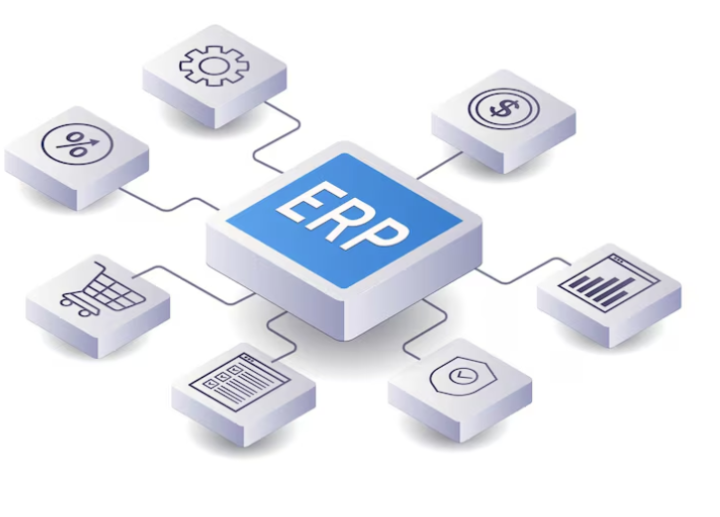
Another common mistake is the expectation that ERP can automatically remediate faulty internal processes. ERP is merely an enabling tool, and the true transformation must originate within the enterprise itself. This directly relates to change management and training efforts.
ERP's role is to standardize, automate, and increase transparency, but it cannot independently correct fundamentally flawed processes. The business must first undertake process optimization, which involves reviewing redundant steps, clearly defining accountabilities, standardizing data transmission methods, and adjusting workflows to align with operational realities. Only when processes are standardized can ERP truly become a value-generating tool and avoid the pitfall of "good system, but flawed operation."
9. Inadequate change management and insufficient training

ERP deployment constitutes a working culture transformation, not just a software installation.
If the enterprise lacks a robust Change Management strategy, fails to communicate the digitalization vision internally, or does not provide systematic employee training, personnel will not understand the necessity of the transition and will likely revert to old habits.
Employees must grasp this vision and be thoroughly guided. However, many organizations underestimate the human factor, leading to staff not understanding the objectives of digital transformation, not knowing how to use the system, or feeling compelled to alter established work routines.
For ERP to deliver its maximum value, the business must invest in continuous training, developing clear instruction manuals, conducting training based on real-world business scenarios, and fostering an interactive environment among the implementers, managers, and end-users. When staff understand "why the change is necessary" and "how ERP helps them perform better," the ERP project can achieve long-term success.
10. Underestimating the total cost of ownership (TCO)
Finally, a major mistake many businesses make is underestimating the Total Cost of Ownership (TCO) of an ERP implementation. Many only focus on the initial purchase price while overlooking the long-term expenses required to operate the system. In reality, ERP is a strategic 3–5 year investment, not a one-time cost.
TCO encompasses various elements: implementation costs, consulting fees, customization to internal processes, employee training, maintenance, periodic upgrades, fees for integration with other systems, and even the cost of operational disruption during the transition phase. Without sufficient budget forecasting, the enterprise risks incomplete investment, being forced to cut essential features, or failing to deploy expansion phases, leading to waste and reduced efficiency.
Accurately assessing TCO helps the enterprise select a solution that matches its financial capacity and enables the planning of long-term operations for ERP to become a sustainable platform rather than a financial burden.
11. Sota Solutions - specific tailored ERP system provider
Sota Solutions, a provider of industry-specific tailored ERP systems, possesses a team of seasoned experts with extensive experience in consulting, implementing, and optimizing operational processes for businesses in Vietnam and the APAC region. With deep business analysis capabilities and a thorough understanding of the specific characteristics of each sector, Sota Solutions builds flexible and optimized ERP solutions aligned with the actual operating models of its clients.
A prime example is Sota FMS (Freight Management System) – a specially designed management solution for the Logistics industry. The system is built upon the real-world operational workflows of freight forwarders and transportation companies, covering everything from carrier booking management, waybills/Bills of Lading (B/L), vessel schedules, and cost management, to the integration of AI-OCR for automated document reading and data entry. Thanks to its specialized modular structure, Sota FMS allows businesses to cut manual processing time by up to 60%, reduce document errors, and standardize the entire process from sales to operations and accounting.
Sota Solutions does not merely supply software; it delivers a comprehensive management platform, engineered by a team that is business-fluent, deeply understands the clients' operational challenges, and possesses the capability to design suitable solutions for each industry. This is why Sota Solutions is poised to be a trusted partner in the journey of digital transformation and operational optimization for numerous enterprises in 2026.
12. Conclusion
ERP implementation is a strategic journey, demanding that businesses invest not only in technology but also in processes, people, and management mindset. Ten common mistakes, ranging from failing to clearly define objectives, selecting a non-industry-specific solution, poor data quality (dirty data), weak change management, to underestimating the Total Cost of Ownership (TCO), can all lead a potentially successful ERP project to failure.
To mitigate these risks, enterprises require an ERP system that is flexible, modern, and aligned with industry specifics, along with an experienced implementation partner that specializes in tailored solutions across various sectors, from logistics, manufacturing, distribution, to retail and services.